In this article
- What should an on page seo service actually deliver?
- Where on-page work ends and other SEO begins
- The page-level problems a provider should fix
- How the work should move from audit to implementation
- How to tell whether the fixes are helping
- Frequently asked questions
- Get a clear scope before paying for fixes
An on page seo service should fix the parts of your website that make a page difficult to understand, find or use. That includes unclear targeting, weak titles, missing service information and poor internal links. It should leave you with improved pages, not just a spreadsheet of recommendations.
The distinction matters when you are comparing proposals. One provider may rewrite and publish changes across ten service pages. Another may supply an automated audit and expect your team to implement everything. Both can describe their offer as on-page SEO, but the deliverables are different.
For a Canadian business, the useful question is not simply whether a provider will “optimize keywords.” It is which problems they will fix, who will make the changes and what evidence will show that the work helped. Here is how to assess the service on those terms.
What should an on page seo service actually deliver?
On-page SEO improves the content and page-level elements you control so search engines can understand a page and visitors can assess whether it meets their needs. Its purpose is to make relevant pages more useful and easier to discover, not to manufacture guaranteed rankings.
A paid engagement should identify the affected URLs, explain their problems and specify the work included. Depending on the agreement, that work may involve editing existing pages, writing missing sections or preparing changes for your developer.
| Deliverable | What a useful version contains |
|---|---|
| Page inventory | The URLs being reviewed and their intended purpose |
| Prioritized findings | Problems ranked by likely impact, urgency and effort |
| Recommended changes | Specific edits rather than generic instructions |
| Implementation scope | Who publishes content, adjusts templates and handles code |
| Quality assurance | Checks that approved changes work on the live site |
| Performance baseline | Relevant search and conversion data recorded before changes |
An audit is a diagnosis, not implementation. A report identifying duplicate titles has value, but it is different from rewriting those titles, publishing them and checking the results.
Confirm the unit of work before signing: pages reviewed, pages rewritten, templates changed or hours supplied. “Full optimization” is too vague to compare fairly across providers.
Where on-page work ends and other SEO begins
An on page seo service usually concentrates on individual pages and the connections between them. Technical SEO addresses whether search engines can access, render and index the website correctly. Off-page SEO concerns signals outside your website, including relevant backlinks.
These areas overlap. A provider might discover that a valuable service page contains an accidental noindex directive. Finding that issue fits naturally into a page review, but fixing a sitewide indexing problem may require separate technical work.
Local SEO adds another layer. Your service pages can explain where you operate, but Google Business Profile management, business listings and review processes are separate tasks unless the proposal includes them. MarketingFlow’s comparison of on-page and off-page SEO explains those responsibilities in more detail.
Traffic acquisition through other channels is separate again. A B2B SaaS company might run LinkedIn creator campaigns through Naano to bring prospects to a landing page. Those campaign visits should be measured separately from organic search, even when both channels use the same improved page.
A sound proposal makes these boundaries explicit. Otherwise, you can pay for content edits while the actual obstacle remains an indexing issue, weak visibility outside your website or an incomplete local presence.
The page-level problems a provider should fix
Search intent and pages competing for the same job
An on page seo service should first establish what each priority page is supposed to accomplish. A person searching for an emergency plumber needs availability, coverage and a way to call. Someone researching a leaking tap may want instructions before considering professional help.
Targeting both needs with one unfocused page can produce content that satisfies neither. The fix may be to sharpen the service page and create a separate informational resource, not add more keywords to the existing copy.
Your provider should map related searches to appropriate pages and investigate unnecessary overlap. Two pages mentioning the same subject are not automatically a problem. The concern is whether they duplicate the same purpose and make it unclear which page should serve that search.
For example, a Calgary accounting firm might have separate pages for bookkeeping and corporate tax preparation because they represent different services. Creating several nearly identical bookkeeping pages for minor keyword variations is harder to justify.
The deliverable should be a page-to-topic map with a reason for each recommendation. Merging, redirecting or removing a URL needs particular care because the existing page may already attract visitors or have valuable links.
Titles, headings, descriptions and URLs
An on page seo service should replace vague page labels with accurate descriptions of what the business offers. A title such as “Services | Home” gives readers little reason to choose the result. A descriptive service title can communicate the offer and location without becoming a string of repeated terms.
The main heading should clearly introduce the page. Supporting headings should organize genuine questions, service details and decision points rather than repeat the same phrase in different forms.
Meta descriptions deserve attention too, but their role needs to be understood. They can help communicate relevance in search results; they are not a direct Google ranking factor. Google may also generate a different snippet from page content.
Similarly, Google does not promise to display your submitted title exactly. Its documentation on title links explains that several page signals can influence the displayed wording.
URL changes require more caution than title edits. A readable address is useful, but changing an established URL solely to insert a keyword may create unnecessary migration work. Where a change is justified, the scope should include an appropriate redirect and updated internal links.
Missing answers, weak evidence and local relevance
An on page seo service should improve the substance of a page, not simply increase its word count. Service pages often underperform because they omit information a buyer needs before making contact.
For a contractor, that might mean explaining the work included, project limitations, service areas and how estimates are prepared. For a professional firm, it could mean clarifying who the service suits, what documents are needed and what happens after an enquiry.
Evidence should be accurate and attributable. Relevant staff qualifications, genuine project examples and clearly explained processes can help visitors assess the business. A provider should never invent testimonials, credentials or years of experience to fill a template.
Canadian relevance should also reflect real operations. A page can state the communities served, applicable provincial requirements or whether quoted prices are in Canadian dollars when those details matter. Repeating city names throughout the copy is not a substitute for local usefulness.
Ask how factual review works. Your SEO provider can research search behaviour and improve the writing, but your business should approve service descriptions, regulated claims and operational details before publication. That review is especially important for legal, financial and health-related content.
Internal links, images and the next action
An on page seo service should make important pages easier to reach from relevant parts of the website. A useful service page can remain overlooked if the only route to it is through an obscure menu or an outdated sitemap.
Internal links should connect related subjects with descriptive wording. An article about furnace maintenance can naturally point readers towards a furnace repair service where that option helps them. Linking every occurrence of a phrase creates clutter rather than a better journey.
Image work should address both usability and performance. This can include appropriate compression, suitable dimensions and useful alternative text for meaningful images. Decorative images generally do not need descriptive alt text. Alt attributes should explain the image, not hold a list of target keywords.
The provider should also check the next step. Phone links should work on mobile, enquiry forms should submit successfully and calls to action should match the offer. Conversion testing is not identical to SEO, but sending additional search visitors to a broken form wastes the opportunity.
These checks should happen on the published page, including its mobile layout. A correctly written document does not prove the live website is usable.
Page-level technical issues and structured data
Some problems sit between content optimization and technical SEO. A page may have excellent information but point search engines towards a different canonical URL, load essential content unreliably or contain conflicting indexing instructions.
A competent review should flag these issues and identify who can resolve them. The same applies to slow-loading images, intrusive layouts and mobile elements that prevent visitors from using the page.
Core Web Vitals can help diagnose aspects of loading performance, responsiveness and visual stability. Improving them can support a better experience, but a high performance score does not guarantee rankings or compensate for irrelevant content.
Structured data is another scoped task. Markup should accurately describe visible content and use an appropriate supported type. Adding schema does not guarantee a rich result, and a service business should not receive fabricated ratings just to qualify for extra search features.
The proposal for an on page seo service should distinguish straightforward page edits from changes requiring developer access, template modifications or broader technical investigation. Ask whether the provider will implement each fix, coordinate with your developer or only document the recommendation.
How the work should move from audit to implementation
Start with a baseline and a limited set of priority pages. Existing service pages with relevant search impressions, clear commercial value and obvious information gaps are often sensible candidates. Pages blocked from indexing may need technical attention first.
The provider should prioritize by expected value, severity and effort. Fixing a misleading title on a high-value service page may matter more than rewriting dozens of descriptions on low-priority articles. Adding genuinely missing service details may help more than polishing an already clear heading.
Implementation also requires an agreed access process. Use individual accounts and the minimum permissions needed for the job. Your business should retain control of its domain, website and analytics properties. Content approval, backups and a rollback process should be settled before substantial changes go live.
A practical on page seo service also maintains a change log: which URL changed, what was edited, when it was published and who approved it. That record helps your team troubleshoot problems and interpret later performance changes.
If your team will handle publishing, MarketingFlow’s guide to performing on-page SEO can provide implementation context. Still, the provider’s handover should contain page-specific instructions rather than sending your staff away to work out the recommendations themselves.
How to tell whether the fixes are helping
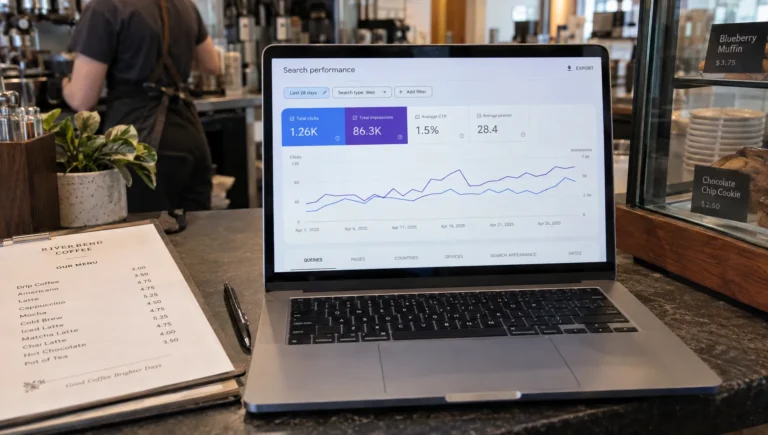
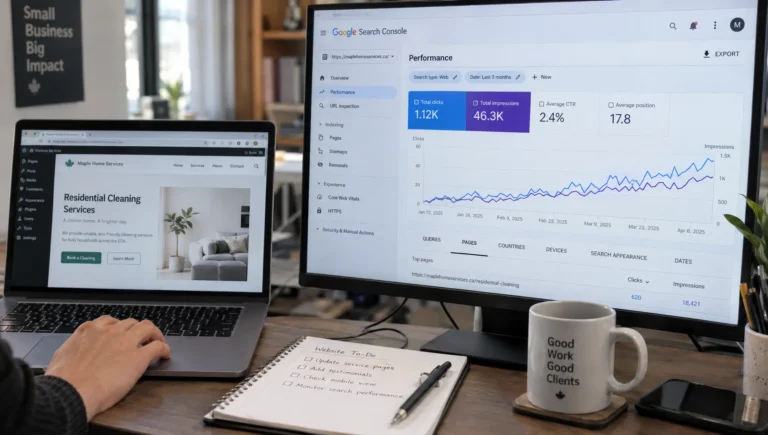
Measure the affected pages against their original purpose. Google Search Console can show organic impressions, clicks, queries and indexing information. GA4, when configured correctly, can help connect organic visits with meaningful actions such as completed enquiries.
Before implementation, record a comparable baseline. Separate branded searches from non-branded searches where practical, note seasonal demand and identify other campaigns or website changes that could influence results.
Useful reporting connects three layers: completed work, search performance and business outcomes. A provider should be able to show which pages changed, whether relevant visibility or clicks improved and whether those visitors took useful actions. Tracking must be tested before you rely on conversion numbers.
An on page seo service cannot establish success from a ranking screenshot alone. Search position varies by query, location, device and time. Average position is useful context, but it should not replace page-level traffic and qualified enquiry data.
Tools also have limits. A crawler such as Screaming Frog can identify technical patterns and missing elements, but it cannot confirm that your service description is accurate. A keyword platform can suggest demand, but those estimates do not prove that a query will generate customers.
Google must recrawl and reassess changed pages, so movement is not immediate or predictable. Agree on review checkpoints, use comparable periods and avoid attributing every fluctuation to the latest edit.
Frequently asked questions
How long does an on page seo service take to produce results? Implementation time depends on the number of pages, the complexity of the changes and the approval process. Search effects can take longer because Google needs to revisit the pages. Ask for a delivery schedule and reporting checkpoints, not a guaranteed date for first-page rankings.
Is a one-time audit enough? It can be enough to identify problems when your team can implement and verify the recommendations. If you need writing, publishing or developer coordination, an audit-only engagement leaves that work with you. Confirm the implementation responsibility before paying.
Will page optimization improve Google Maps rankings? Relevant service and location pages can support your local presence, but Maps visibility also involves your Google Business Profile and other local factors. Do not assume profile optimization, review management or business listing work is included in a page-focused package.
Does on-page SEO still matter with AI search? Clear, accessible and accurate content remains useful to readers and search systems. That does not mean a provider can guarantee inclusion in AI-generated answers. Claims about AI visibility should be backed by an explained measurement method, not presented as a replacement for qualified traffic and leads.
Get a clear scope before paying for fixes
MarketingFlow offers technical and on-page SEO, keyword research and SEO content writing, with SEO plans starting at $99/month and no long-term contracts. Start with a free SEO audit, then confirm which pages, implementation tasks and reporting are included in the proposed plan.
The decision should come down to identifiable problems, approved changes and evidence of progress, not the length of an audit report.