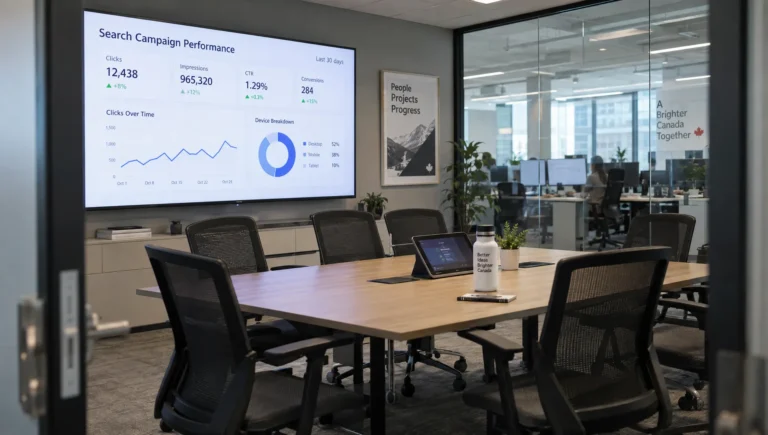
In this article
- Understand the two kinds of local visibility
- Turn “seo local business” research into a launch plan
- Confirm your business identity before creating listings
- Prepare your Google Business Profile correctly
- Publish a useful website before the opening rush
- Match services to the places you actually serve
- Prepare citations and a legitimate review process
- Set up measurement before enquiries arrive
- Run a final launch-day check
- Frequently asked questions
- Get your SEO foundations checked before launch
If you’ve searched “seo local business” while preparing to open, you’ve probably found plenty of tactics but little guidance on what to do first. A new Canadian business needs a practical sequence: confirm its public details, build a useful website and prepare accurate listings before promoting the opening.
You do not need dozens of articles or directory listings to launch. You need a foundation that helps Google understand your business and helps nearby customers decide whether to contact you. Start early enough to leave room for website indexing, profile verification and corrections.
Understand the two kinds of local visibility
Local search gives your business two distinct opportunities. Google Maps and local-pack results show business profiles, often alongside reviews, hours and directions. Organic results show website pages that answer the searcher’s needs.
A Google Business Profile supports the first opportunity. A crawlable website with relevant service and location information supports the second. Neither replaces the other.
Google explains that local rankings primarily depend on relevance, distance and prominence. You can improve the clarity and credibility of your business information, but you cannot remove the effect of distance by listing more service areas.
Before opening, the benefit is readiness rather than instant rankings. Customers should be able to find accurate opening information, understand your offer and take an appropriate next step, such as booking an appointment after launch.
Turn “seo local business” research into a launch plan
Work backwards from your opening date. The schedule below is a planning framework, not a promise about Google’s processing times.
| Timing | Priority | What should be ready |
|---|---|---|
| Four to six weeks before opening | Business identity and website | Confirmed contact details, domain ownership and core page drafts |
| Two to four weeks before opening | Public website and profile preparation | Indexable website, eligible business profile and accurate opening information |
| Final week | Testing and corrections | Working forms, mobile checks and consistent public details |
| Opening week | Customer information | Accurate hours, real photos and clear booking or enquiry options |
| First month | Measurement and refinement | Search data, lead records and feedback from actual customers |
If you have less time, protect the essentials rather than compressing every optional task. When hiring help, use a small-business SEO services checklist to separate launch-critical work from ongoing improvements.
Confirm your business identity before creating listings
Changing details across several platforms wastes time and creates conflicting information. Start with one reference document containing your customer-facing business name, primary phone number, website address, opening date and hours.
For a storefront, record the complete address, including the correct unit and postal code. For a business that travels to customers, decide which contact details can be public without exposing a private home address.
Your profile name should reflect the name customers encounter in the real world. Do not add phrases such as “best Toronto plumber” unless they genuinely form part of that established name.
Good SEO for a local business begins with a consistent identity, not extra keywords in every field. Keep the underlying facts aligned across platforms; harmless differences such as “Street” versus “St.” are not the same as conflicting addresses or phone numbers.
Register key accounts under an owner-controlled email address and give contractors appropriate access. The business should retain ownership of its domain, website and listings.
Prepare your Google Business Profile correctly
Check eligibility before claiming an address
Google Business Profile is generally intended for businesses that meet customers in person, either at a qualifying location or by travelling to them. Online-only businesses and lead-generation companies are not eligible simply because they serve a particular city.
Follow Google’s business representation guidelines when choosing your setup. A virtual office does not automatically qualify as a business location.
If customers do not visit your address, use the appropriate service-area setup and hide the address. Select areas you genuinely serve rather than adding distant cities to suggest broader coverage.
For a storefront, make sure the location can meet Google’s requirements, including permanent signage where required. Choose the most specific accurate primary category, then add secondary categories only when they describe real services. Categories explain what the business is, not every product it might sell.
Set the future opening date before verification
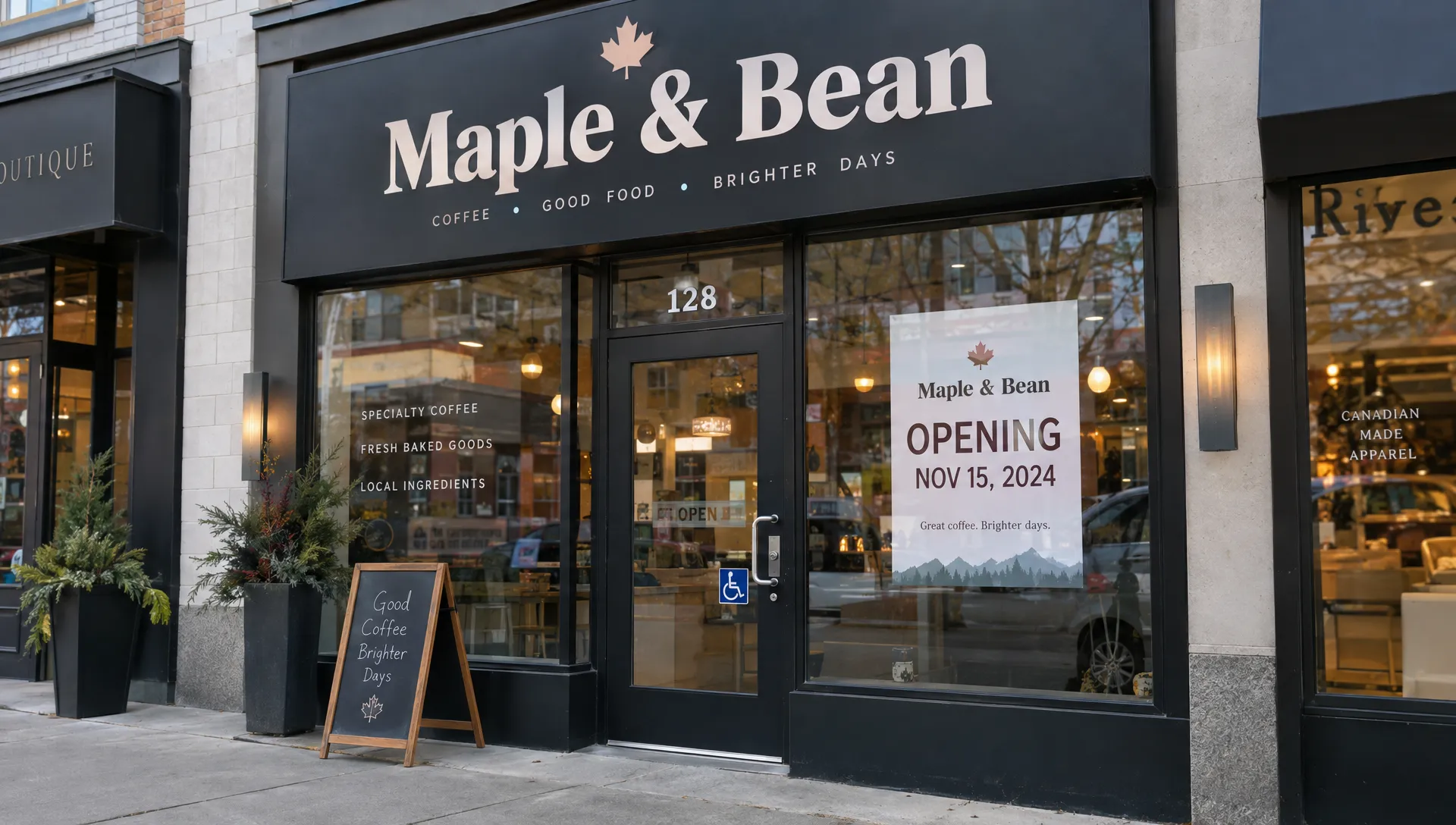
Google provides a process for businesses that have not opened yet. Its future opening date guidance explains that an eligible, verified profile can appear 90 days before the opening date.
Set the future opening date before completing verification so your profile does not incorrectly suggest that you are already open. Follow the verification method Google offers and allow time for additional checks.
Pre-launch local business SEO also depends on clear customer expectations. State whether enquiries, advance bookings or purchases are currently available. Never publish opening hours that invite people to visit an unfinished premises.
Add genuine photos when available, such as exterior signage, the entrance and the completed customer space. Avoid stock photos that misrepresent the location. Before creating a new listing, check whether a profile already exists, especially if you acquired an existing business or changed its name.
Publish a useful website before the opening rush
Launch core pages instead of a bare countdown
A countdown page gives search engines and customers little useful information. Publish a small, complete website as soon as the essential facts are confirmed.
For most single-location businesses, that means a homepage, substantive pages for major services, an about page and a contact or location page. Include the opening date and explain how to enquire or book before launch.
Each service page should answer practical questions: what you provide, who it is for, where it is available and what happens after someone contacts you. Use real credentials, relevant experience and accurate photos where possible. A new company can describe its team’s experience without inventing a business history.
The purpose of SEO for a local business is not simply to attract visits. Give those visitors a clear next step. If appointments begin next month, the booking process should make that date unmistakable rather than implying immediate availability.
Remove technical barriers to discovery
Staging websites are often hidden from search engines intentionally. That becomes a problem when the same restrictions remain after launch.
Check that public pages are not password-protected or marked noindex. Confirm that important resources are not accidentally blocked, pages load over HTTPS and navigation links work. Submit the XML sitemap through Google Search Console and inspect the main URLs. Submission helps discovery but does not guarantee indexing.
On a phone, test the menu, enquiry form, booking journey and tap-to-call link. Compress oversized images and avoid intrusive pop-ups that cover essential information.
Technical local business SEO should make the site accessible and understandable. Add appropriate LocalBusiness structured data only when it accurately reflects the business and meets the relevant requirements. Do not invent ratings or expose a private address just to complete markup. Structured data is not a substitute for a Google Business Profile or a guarantee of enhanced search results.
Match services to the places you actually serve
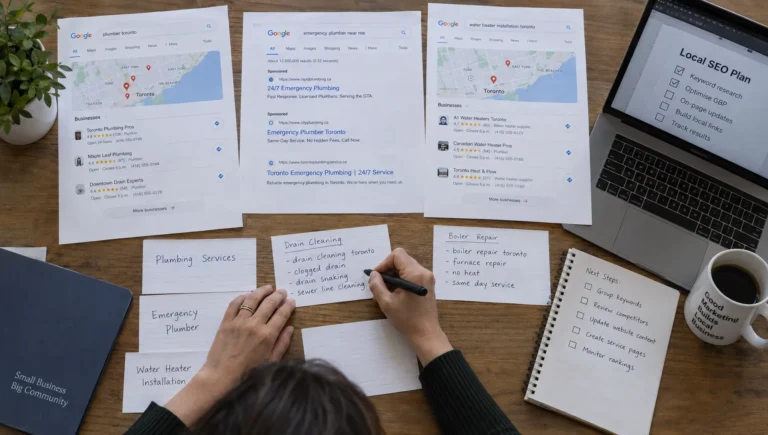
Build a short keyword map before writing more pages. Combine genuine services with relevant locations, such as “furnace installation Calgary” or “family dentist Dartmouth.” Then check the results to understand whether searchers expect a service page, clinic location or informational guide.
Assign each important search intent to one useful page. A single-location business rarely needs separate pages for every nearby suburb at launch.
If you have multiple physical locations, each location page should contain distinct information: its address, hours, services, directions and relevant photos. For service areas without premises, create separate pages only when you can offer genuinely useful local detail. Swapping city names into otherwise identical text creates weak pages.
Effective SEO for a local business reflects actual operations. If you serve customers in English and French, publish accurate language versions where useful and keep contact information and booking options consistent. Do not create language pages that the business cannot maintain or support.
Prepare citations and a legitimate review process
Once your core details are stable, assess relevant listings such as Apple Business Connect, Bing Places, YellowPages.ca and your local chamber of commerce. Check each platform’s eligibility and publication rules rather than assuming every directory accepts pre-opening businesses.
Prioritize listings that customers might actually use. A small set of accurate, relevant entries is more useful than a bulk submission package that spreads incorrect information. Service-area businesses should check privacy settings before publishing a residential address anywhere.
For local business SEO, reputation building should follow real customer experiences. Prepare a neutral review request for use after completed appointments, purchases or other genuine interactions. Ask customers consistently rather than inviting only those you expect to leave five stars.
Do not buy reviews, offer rewards for them or ask friends to pose as customers. Before opening, you can build credibility through factual team introductions, authentic project examples and genuine community relationships instead.
Supplier directories, professional associations and local partnerships may also provide relevant links. Pursue those relationships because they make sense for the business, not because a seller promises a particular ranking increase.
Set up measurement before enquiries arrive
Connect Google Search Console and configure your website analytics before promoting the launch. Test your own form submission and booking journey so you know whether enquiries are recorded correctly.
Keep three categories separate:
| Measurement area | What to monitor | What it tells you |
|---|---|---|
| Website search visibility | Search Console impressions, clicks and landing pages | Whether website pages are appearing in organic search |
| Business profile activity | Available profile views and interactions | How people discover and interact with the profile |
| Business outcomes | Qualified enquiries, bookings and sales | Whether visibility is producing useful demand |
A phone-link click is not proof that a call connected. A form confirmation is not proof of a qualified lead. Use a simple enquiry log to record what customers wanted and whether they became customers.
Measuring SEO for a local business this way prevents a common mistake: celebrating traffic while overlooking weak enquiries or a broken booking process. Keep pre-opening and post-opening results separate because customers’ ability to buy has changed.
If paid search will support the opening, apply the same discipline. Although written for ecommerce, this guide to what a search engine marketing agency should optimize offers a relevant principle: connect search intent, landing-page quality and measurement before increasing traffic spend.
Run a final launch-day check
The final check should focus on things that could mislead a customer or prevent an enquiry. Avoid redesigning the website or publishing dozens of new pages during opening week.
- Opening information: Confirm the date, regular hours and any opening-week exceptions across your website and profile.
- Customer journey: Test calls, forms, directions and bookings from a phone.
- Search access: Check that important website pages remain publicly accessible and inspect their indexing status.
- Public details: Recheck your business name, address or service area and primary contact information.
- Ownership and tracking: Confirm that the owner can access key accounts and that test enquiries are recorded.
After launch, review results regularly and make corrections based on real demand. SEO for a local business becomes easier to prioritize once you can see which services attract impressions, which pages generate enquiries and which customer questions remain unanswered.
Frequently asked questions
Can I start local SEO before my business opens? Yes. Publish useful website pages, establish consistent business information and prepare an eligible Google Business Profile with a future opening date. Clearly distinguish advance enquiries from services that are already available.
Will I rank on Google Maps by opening day? There is no guarantee. Verification, competition, relevance, proximity and prominence all affect visibility. Have your information ready early, but do not base opening-week revenue forecasts on a promised Maps position.
Do I need a page for every city I serve? No. Start with strong service pages and accurate coverage information. Add separate location or service-area pages only when each can provide distinct value to customers.
Can a home-based business appear without showing its address? An eligible business that travels to customers can use a service-area profile and hide its address. Online-only businesses do not become eligible merely by selecting a service area.
What should a limited launch budget cover first? Prioritize an accessible website, accurate business information, an eligible profile and working enquiry tracking. Additional content and link acquisition can follow once the essentials function correctly.
Get your SEO foundations checked before launch
A pre-launch review can identify avoidable problems while they are still straightforward to fix: an index-blocked website, an unsuitable profile setup or a booking form that sends nowhere.
MarketingFlow offers local SEO, technical and on-page optimization, content writing and backlink building for Canadian businesses. Plans start at $99 per month with no long-term contracts, and free SEO audits are available.
Before committing to ongoing work, request a free SEO audit from MarketingFlow and discuss which tasks belong before opening and which can wait until you have real customer data.