In this article
- What a dental SEO agency needs to know about Canadian privacy
- Map information flows before connecting marketing tools
- Improve local visibility without exposing patients
- Treat reviews and patient stories as advertising decisions
- Inspect content and website workflows, not just promises
- Measure enquiries without exporting clinical records
- Verify dental experience and the results presented
- Keep ownership and access under clinic control
- Ask what happens when something goes wrong
- Compare scope, exclusions and total cost
- Use a staged onboarding plan
- Frequently asked questions
- Start with a clearly scoped review
Choosing a dental SEO agency means deciding who can change your website, connect tracking tools and influence how your practice handles patient enquiries. A proposal can promise stronger Google Maps visibility while overlooking a form that sends treatment details to analytics or a review response that confirms someone attended your clinic.
For Canadian dental practices, privacy belongs in the selection process before anyone receives account access. The right partner should explain how it will attract prospective patients, measure useful outcomes and keep identifiable health information out of routine marketing workflows.
This does not require your practice manager to become a privacy lawyer. It requires specific questions, evidence you can inspect and clear responsibilities in the contract. Use the following checks to distinguish agencies that understand those boundaries from agencies that simply add dentistry to their list of industries served.
What a dental SEO agency needs to know about Canadian privacy
Start by asking which privacy requirements the agency believes apply to your practice and why. A confident answer that mentions only HIPAA is not enough for a Canadian clinic.
The Office of the Privacy Commissioner of Canada explains that Canadian privacy laws include federal and provincial frameworks. Applicability depends on factors such as jurisdiction, the organization and the activity involved. PIPEDA may apply to commercial activities, while provincial private-sector or health-information legislation may also govern relevant activities.
Ontario’s Personal Health Information Protection Act, for example, establishes obligations for health information custodians and others handling personal health information. Do not assume an Ontario workflow automatically satisfies another province’s requirements.
HIPAA is a US framework, not a substitute for this analysis. As a comparison, this US medical practice’s HIPAA privacy notice describes patient rights involving access, corrections and confidential communications. It illustrates the substance a privacy notice can address, but it is not a Canadian template or evidence that a marketing vendor meets Canadian obligations.
Ask the agency to identify uncertainties rather than offer blanket legal assurances. Your clinic’s privacy lead or qualified adviser should confirm the applicable requirements, including professional advertising rules, before approving workflows involving patient information.
Map information flows before connecting marketing tools
Before accepting a tracking recommendation, ask the dental SEO agency to show what information moves between your website, booking provider, analytics platform, call service and its own systems. A simple inventory is more useful than a generic promise of secure technology.
The inventory should identify the information collected, its destination, who can access it and when it is deleted. Include subcontractors, support access and processing locations, not just the company named on your invoice.
Pay particular attention to information that patients volunteer. A field labelled “How can we help?” may receive descriptions of pain, medications or previous treatment even if the form was intended only for enquiries. Depending on context, booking and enquiry information can itself be sensitive.
Ask these questions before implementation:
- Does the agency need this information to perform the agreed SEO work?
- Can the clinic handle the identifiable information while sharing only aggregate outcomes?
- Could form fields, page URLs or booking references enter analytics, email alerts or support tickets?
- Which tools retain copies, and what deletion process covers those copies?
Minimum necessary access is the starting point. Routine SEO work generally does not require access to clinical charts or patient-management records. Any proposed exception needs a defined purpose, an appropriate legal basis and clinic approval before access is granted.
Improve local visibility without exposing patients
A dental SEO agency should explain how it will strengthen local visibility through accurate business information, useful service pages, technical improvements and legitimate local authority building. None of those activities requires uploading a patient list to an unfamiliar tool.
For Google Business Profile, review the proposed changes to your practice name, categories, opening hours, services and appointment links. The information should reflect the actual clinic. Avoid providers proposing keyword-stuffed business names, invented locations or duplicate profiles to manufacture coverage.
Access matters here too. Keep the profile under clinic control and give the agency an appropriate management role rather than sharing a single password. Confirm who approves photographs, service descriptions and public responses.
Photographs deserve a separate check. A waiting-room image can reveal a patient, an appointment screen or a document on reception. Images should be reviewed for incidental disclosures before publication, even when the photographer was focused on the room rather than its occupants.
For service-area pages, ask how each page will help a real prospective patient. Information about location, accessibility, hours and available services is useful. Near-identical neighbourhood pages and unsupported treatment claims create quality and advertising concerns without demonstrating genuine local expertise.
Treat reviews and patient stories as advertising decisions
Ask the dental SEO agency to separate three activities: requesting reviews, responding to public reviews and republishing patient statements in clinic-controlled marketing. These activities carry different privacy and professional-rule considerations.
A patient posting publicly does not give your clinic unrestricted permission to confirm their identity, discuss treatment or reuse their words elsewhere. A response such as “We are glad your implant surgery went well” can disclose information the clinic should not add to a public conversation.
Agree on neutral response templates and an escalation process. A complaint response can direct someone to contact the practice privately without confirming that the reviewer is a patient. Staff should not debate clinical details online, even when they believe the review is inaccurate.
Review requests should follow platform rules, avoid incentives and not selectively direct only satisfied patients toward public reviews. Also check your provincial dental regulator’s advertising requirements. Testimonials may be restricted or prohibited in some jurisdictions, and written patient consent does not override those restrictions.
For photographs, case stories or before-and-after material, establish whether publication is permitted before discussing consent. Where it is allowed, document the intended channels, scope and duration of use. Consent to treatment is not consent to marketing, and declining publicity should not affect care. Explain applicable withdrawal options without promising that every third-party copy can be removed.
Inspect content and website workflows, not just promises
Before appointing a dental SEO agency, ask to see its approval process for treatment pages, technical changes and tracking scripts. “Our writers understand healthcare” is less persuasive than a documented workflow showing who checks accuracy and who authorizes publication.
Your clinic should review clinical statements, professional titles, pricing representations and outcome claims before they go live. The agency can research search intent and write accessible copy, but it should not independently decide whether a treatment claim is clinically appropriate or permitted advertising.
For website changes, request a staging or testing process using dummy information. Test that enquiry details do not appear in page addresses, analytics events, error logs or confirmation-page tracking. A consent banner does not compensate for unnecessary collection or a poorly configured integration.
Ask how session replay, chat widgets, heatmaps and advertising tags are assessed before installation. Masking settings need testing, and some tools may be unsuitable for particular pages or workflows.
The same scrutiny applies to AI tools. Patient emails, appointment screenshots and clinical records should not enter an unapproved writing or support system. Ask whether subcontractors use such tools, what information they receive and whether their work follows the clinic’s approved handling requirements. Include a rollback process for changes that create unexpected disclosures or disrupt booking.
Measure enquiries without exporting clinical records
A dental SEO agency should connect its work to business outcomes without demanding identifiable patient records for every report. Agree on definitions before launch, especially when the proposal uses terms such as “lead” or “conversion.”
A phone-button click is not a completed call. A form submission is not necessarily a suitable enquiry, and an appointment request is not a confirmed new patient. Reporting these as interchangeable makes results look stronger while giving your practice little operational insight.
| Measure | What it helps establish | Privacy-conscious reporting approach |
|---|---|---|
| Search visibility | Whether relevant searches show your practice | Aggregate query and location trends |
| Website enquiries | Whether visitors take an intended action | Counts without names or free-text messages |
| Connected calls | Whether calls reach the practice | Aggregate connection and duration data, with numbers excluded |
| Confirmed appointments | Whether enquiries become bookings | Clinic-supplied totals for an agreed period |
| New patient attendance | Whether bookings lead to attended visits | Aggregated clinic totals with small-group disclosure risks assessed |
Call tracking needs a separate discussion. Ask whether recording is enabled, where recordings and transcripts go and whether either is necessary. Do not enable recording merely because a platform includes it; assess applicable notice, consent and handling requirements first.
Attribution will remain imperfect. Patients switch devices, return directly or hear about your practice elsewhere. The agency should explain those limits rather than request increasingly intrusive tracking. Avoid reporting small categories that could identify individuals when combined with other information.
Verify dental experience and the results presented
A dental SEO agency should be able to demonstrate relevant work without disclosing another clinic’s patient information. Redacted examples, permission-based references and aggregate results provide a better test than screenshots containing names or appointment details.
For every case study, ask about the starting point, timeframe, geographic market and services delivered. Establish whether the reported improvement concerns rankings, enquiries, booked appointments or attended new patients. Ask how paid advertising, a relocation or a website rebuild affected the comparison.
MarketingFlow’s Brampton dental SEO case study is an example to examine through that lens: review the reported visibility improvements, then ask what supporting evidence is available and what conclusions the data supports. A ranking result alone does not establish patient acquisition or revenue.
Request a reference from a comparable practice where permission has been obtained. Ask how the agency handled approvals, unexpected changes and account handover, not just whether rankings improved.
Also establish who actually performs the work. Dental experience may belong to the salesperson rather than the writer, account manager or subcontractor assigned to your clinic. Ask for a sample treatment-page brief and a sample monthly report. Both should demonstrate useful judgement without exposing another client’s confidential information. Refusal to share patient details is a positive sign; refusal to explain methods is not.
Keep ownership and access under clinic control
Your contract with a dental SEO agency should distinguish account ownership from permission to perform work. The clinic should retain control of its domain, hosting, website administration, Google Business Profile, Search Console and analytics accounts, subject to any clearly disclosed platform arrangements.
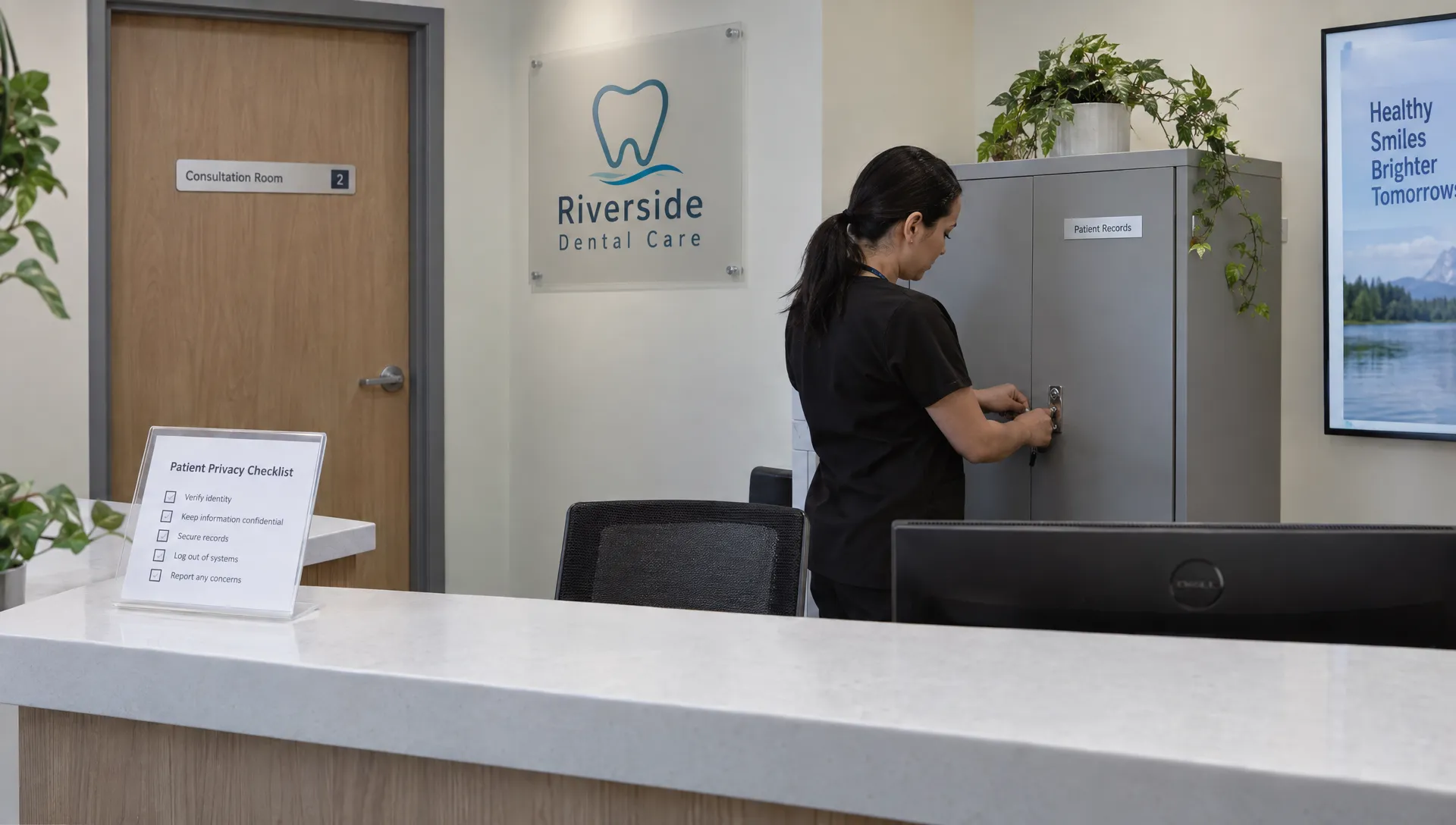
Require named accounts where supported, appropriate access levels and multifactor authentication. Shared credentials make it harder to identify who changed something and harder to remove one person’s access without disrupting everyone else.
Confirm who owns new website copy, images, landing pages and other deliverables after payment. If the provider uses licensed assets, proprietary software or leased pages, those limitations should be disclosed before signing. Ask what continues working if the relationship ends.
The agreement should address approved purposes for handling information, confidentiality, subcontractors, safeguards, retention and deletion. Depending on the applicable framework and arrangement, legal advice may be needed on specific service-provider terms.
Write down the exit process: transfer files, remove agency users, revoke integrations and return or delete information as required. Include treatment of backups and any retention exceptions. A promise to “hand everything over” is not enough if it leaves unclear who controls the domain or whether the booking connection survives termination. Practise account recovery internally so the clinic is not dependent on one employee or outside contact.
Ask what happens when something goes wrong
A useful test for a dental SEO agency is a realistic incident scenario. Suppose a booking form starts sending message contents to an analytics tool after a plugin update. Ask who notices, who stops the transfer and who contacts the clinic.
The answer should identify a responsible contact, an escalation route and documented cooperation obligations. It should cover preserving relevant evidence, identifying affected systems, containing further disclosure and explaining what information was involved.
Your practice needs enough information to assess its own notification and reporting duties under applicable law. Avoid assuming the agency will make those legal decisions for you, or that every incident triggers identical obligations across Canada.
Ask about prevention as well as response. Who checks new integrations? How are staff and subcontractor accounts removed? How often are access permissions reviewed? What evidence can the provider supply about relevant safeguards?
Broad security badges or insurance statements do not answer these operational questions. Request documentation proportionate to the access being proposed. An agency managing public website copy presents a different risk profile from a vendor handling identifiable appointment enquiries. The contract and review process should reflect that difference rather than treating all vendors alike.
Compare scope, exclusions and total cost
The lowest-priced dental SEO agency proposal may cover a narrow set of tasks, while another includes content production, website changes and reporting. Compare the actual deliverables before comparing the monthly fee.
Ask which pages will be improved, how Google Business Profile work is handled, what technical changes are included and how backlink opportunities are assessed. Reject purchased reviews, guaranteed positions and link schemes presented as shortcuts. None demonstrates an understanding of patient trust or sustainable search visibility.
Privacy-related responsibilities also need pricing clarity. Establish who reviews forms, configures tracking, obtains legal advice and maintains consent or privacy notices. Do not assume an SEO retainer includes legal review, security testing or remediation of third-party booking software.
Include software subscriptions, setup charges, content approval rounds and offboarding costs in the comparison. Check cancellation notice requirements and whether an advertised monthly arrangement has separate commitments for hosting or other services.
A shared brief makes proposals easier to assess. MarketingFlow’s guide to comparing SEO providers beyond sales pitches offers a broader evaluation framework; for a dental practice, add the information-handling and professional-advertising checks above. Keep unresolved responsibilities visible rather than allowing them to disappear into a general promise of compliance.
Use a staged onboarding plan
Ask your preferred dental SEO agency to propose an onboarding sequence that resolves access and privacy questions before adding new data collection. A sensible sequence can reduce avoidable exposure without delaying every useful improvement.
During the first stage, confirm clinic ownership of accounts, document current integrations and agree on approval roles. Review the existing privacy notice against actual website behaviour. Identify obvious problems, such as enquiry content appearing in tracking parameters, before installing more tools.
Next, prioritize public-facing improvements that do not require patient data: accurate business information, crawlability fixes, clearer navigation and reviewed service content. Establish baseline visibility and enquiry definitions so later reports have a meaningful comparison.
Only then introduce approved measurement changes. Test forms and booking journeys with dummy submissions, verify what reaches each destination and document the configuration. Give reception a simple way to classify enquiries without exporting clinical notes.
Set an early review meeting to inspect completed work, access permissions and reporting quality. This is a checkpoint for process and implementation, not a promise that rankings or patient numbers will change within a fixed period.
Keep approval records concise but retrievable. The practice should be able to see what changed, who approved it and which systems were affected. That record helps when staff change, integrations break or another provider takes over.
Frequently asked questions
Does a Canadian dental clinic need a HIPAA-compliant SEO provider? HIPAA is not the default framework for Canadian clinics. Ask which Canadian requirements apply and whether any US-related obligations arise from your specific arrangements. A compliance label alone does not establish appropriate handling.
Can a dental SEO agency access our patient-management software? Routine SEO work generally does not require that access. Start with aggregate reporting. Any proposed integration needs a defined purpose, an assessment of necessity, appropriate authorization and documented safeguards before implementation.
Can we publish a review if the patient agrees? Consent alone may not be sufficient. Check applicable provincial dental advertising rules and platform requirements before republishing a testimonial. Permission to provide care is separate from permission to use someone’s information in marketing.
Should we record calls to prove SEO performance? Not automatically. Aggregate call information and clinic-confirmed booking totals may answer the business question. Recording creates additional information-handling responsibilities and requires an assessment of applicable requirements.
What should make us reject a proposal? Warning signs include demands for unnecessary patient data, refusal to leave accounts under clinic control, unapproved tracking installations and promises of guaranteed rankings. Another is using identifiable patient information to impress you during a sales presentation.
Start with a clearly scoped review
MarketingFlow offers SEO services for Canadian dental practices, including local SEO, Google Maps optimization, content and technical work, with plans starting at $99 per month and no long-term contracts.
Request a free SEO audit and ask how the proposed dental SEO agency engagement would handle account access, enquiry tracking and publication approvals. Confirm those responsibilities in writing before granting access. Visibility matters, but so does keeping your clinic in control of the information patients entrust to it.